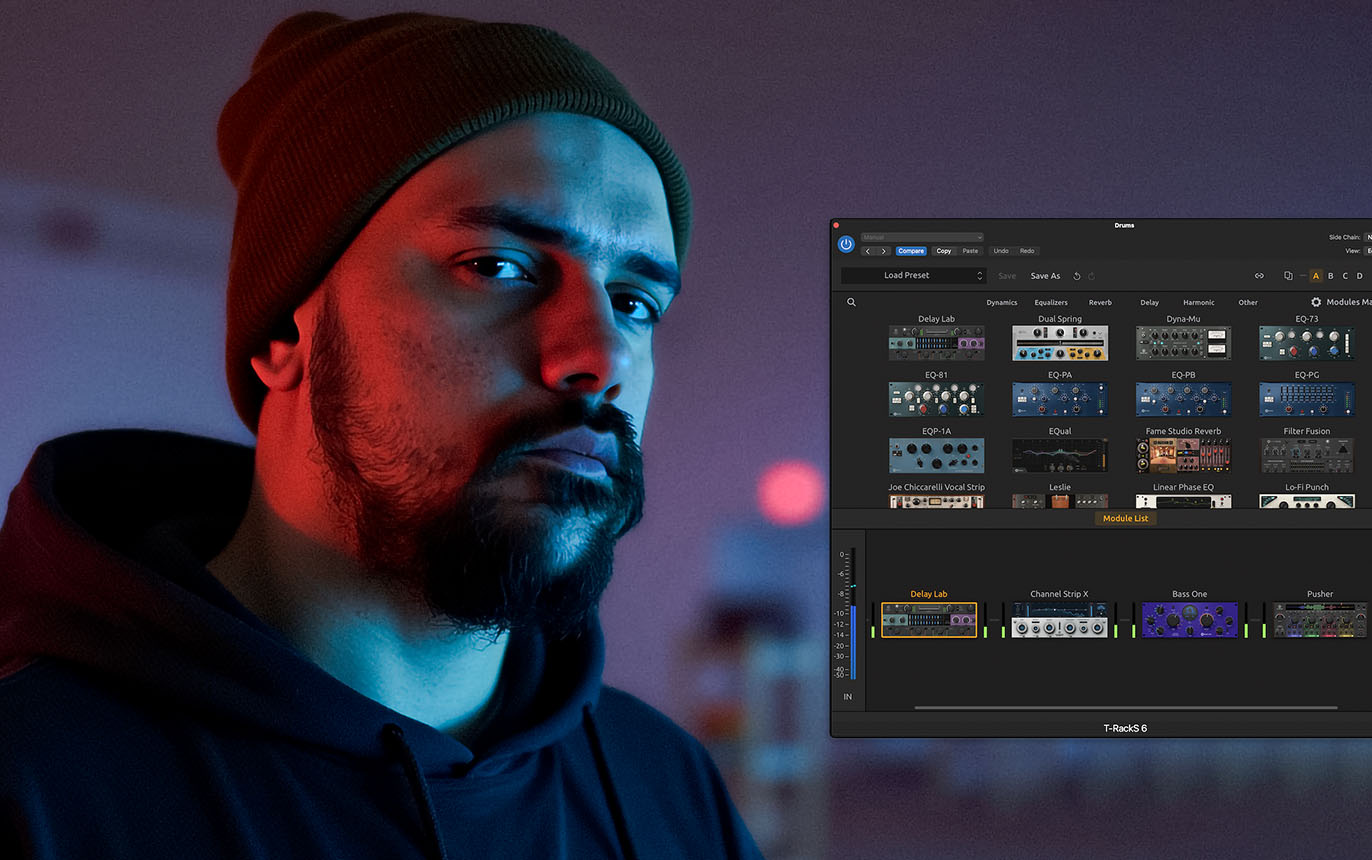
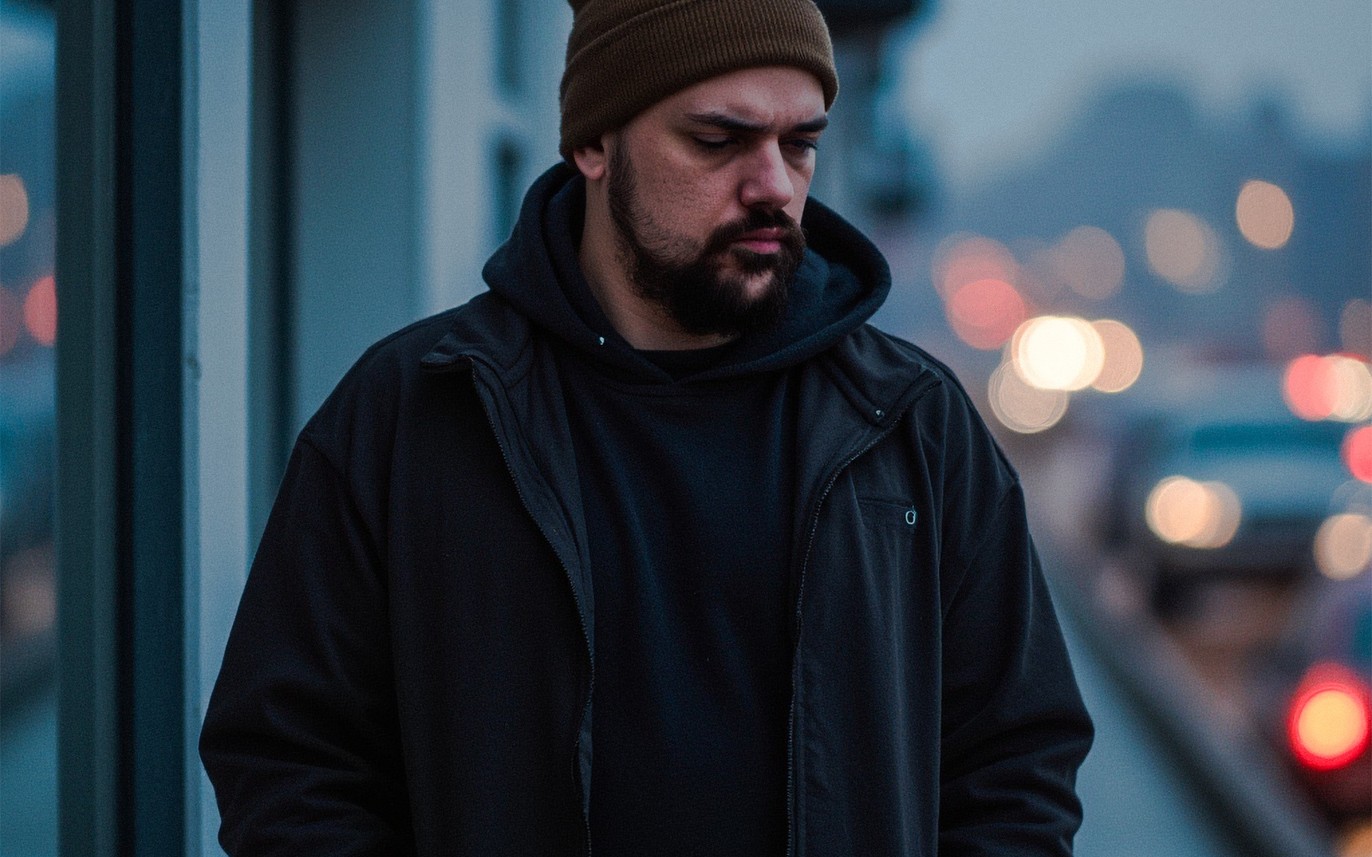
Mattia Marotta, better known as Nihil Young, approaches mixing from the perspective of an artist who also spends a great deal of time finishing records. For this interview, he returned to a track that had already been mixed and mastered, then rebuilt the mix from scratch using almost exclusively IK Multimedia’s T-RackS 6. The goal was not to correct a problem, but more so to see how far the suite could take a record that was already complete.
LIMITED TIME: Get 60% off the T-RackS processors mentioned in this article with promo code NIHILTR6
That process gave him a direct way to evaluate T-RackS 6 in a real production setting. Bass ONE became a central part of the low-end and mix bus treatment, adding the saturation and control he had been looking for at the mix level.
The Joe Chiccarelli Vocal Strip became useful as part of his vocal chain and as a creative effect on selected vocal parts, while the tape emulations found a place across buses, instruments, and vocals. Those tools have since carried into his current workflow, including “NGL” and multiple tracks from his forthcoming Compass LP, out August 14 on Zerothree and also coming to vinyl.
In the conversation below, Nihil Young breaks down how T-RackS 6 helped him refine low end, vocal tone, dynamics, peak control, and final loudness without changing the identity of the original track.
He also explains how processors like Bass ONE, Channel Strip X, Stealth Limiter, LO-FI Punch, Triad Chorus, and Classic Clipper work in many of the same ways as the synth-wave icons The Midnight do, and how the tape emulations fit into a modern mixing and mastering workflow built around clarity, translation, and musical movement.
Interview With Nihil Young
When you decided to revisit this track, what was your main goal? Did you want to test the T-RackS 6 suite by rebuilding the entire mix from scratch?
Exactly.
The previous mix was already complete, with processing and mastering, and I liked it.
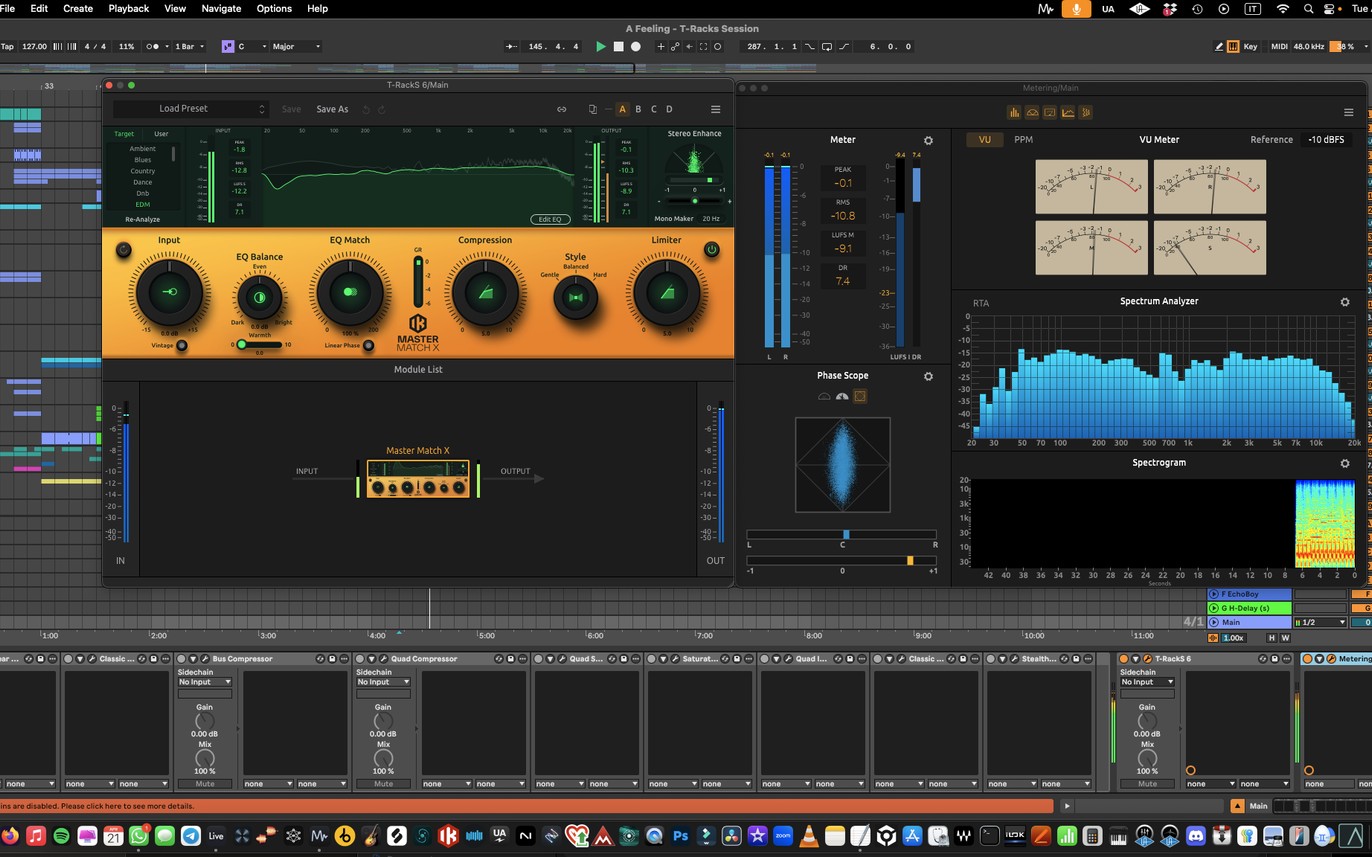
However, I wanted to challenge myself. I decided to reopen the track and rebuild the entire mix from scratch, using almost exclusively the plug-ins from the T-RackS 6 suite instead of the tools I had used before.
It was not about fixing mistakes. It was about seeing how far I could push the sound quality with this suite. I wanted to find out whether I could achieve a cleaner, tighter, and more translation-friendly mix compared to the previous version while preserving the soul and character of the original track.
In the end, the new mix felt more complete and had an added layer of analog character.
Was there a T-RackS 6 processor that immediately made you hear the track in a new way as soon as you inserted it?
Yes, several processors caught my attention right away.
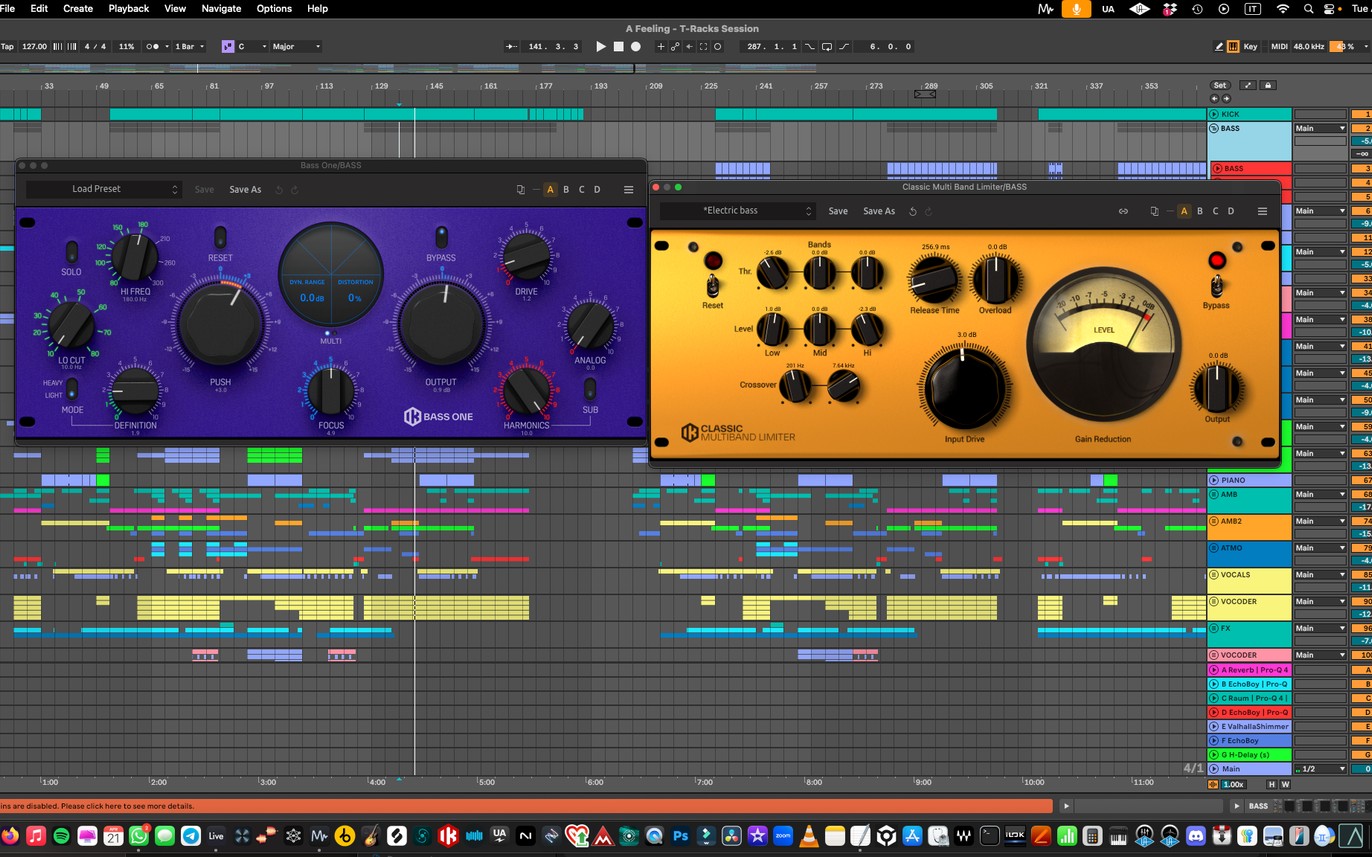
First of all, Bass ONE. As soon as I inserted it, the low end became tight and controlled. It has since become a regular addition to my mix bus because it gives me the saturation I was looking for at the mix level. You can hear its effect on my track “NGL” and on multiple tracks from my forthcoming album, Compass LP, out on Zerothree on August 14 and also coming to vinyl.
The Joe Chiccarelli Vocal Strip also became useful right away. I use it as an addition to my vocal chain and sometimes as a standalone creative effect on selected vocals. In parallel on the vocal bus, it added character, definition, and presence without sounding overprocessed.
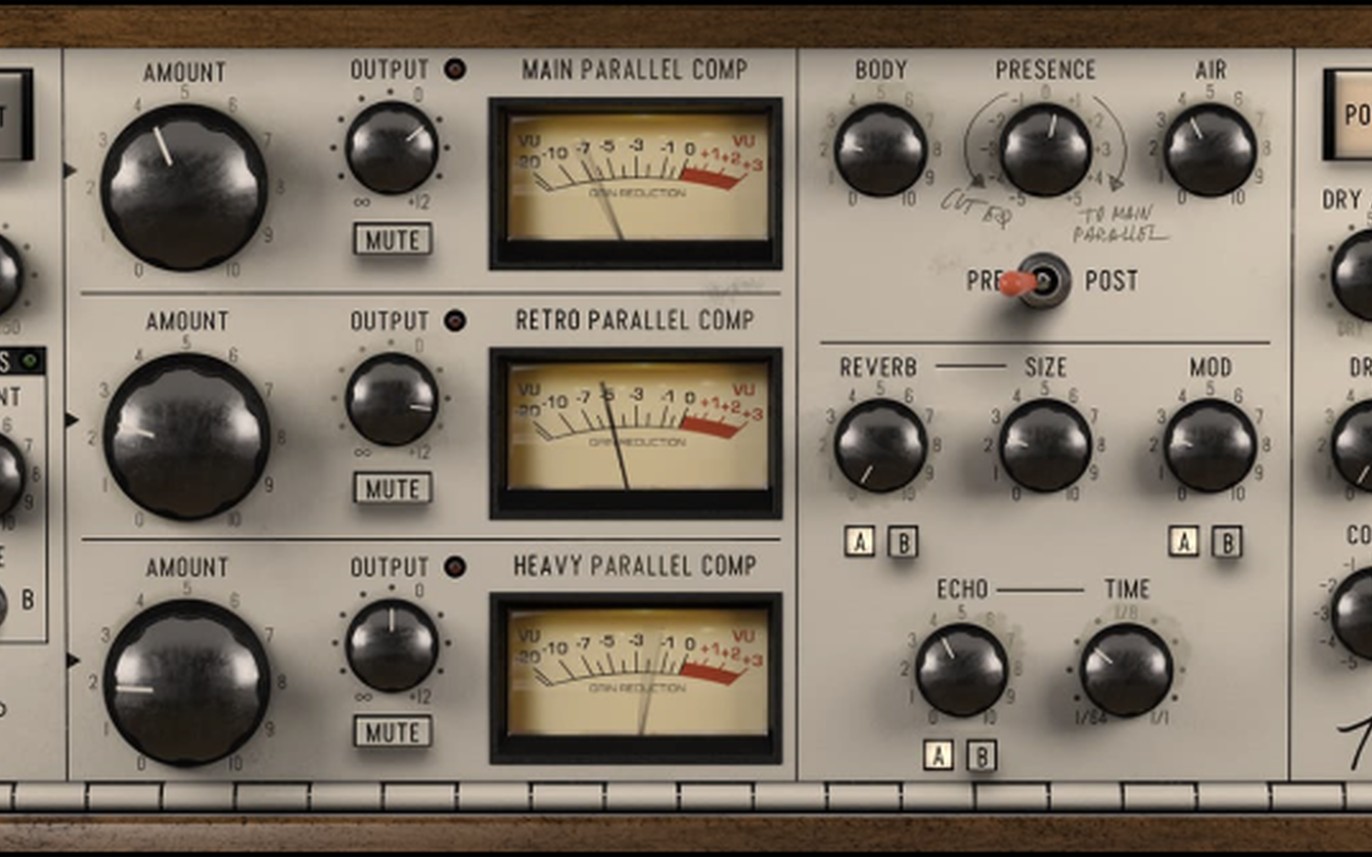
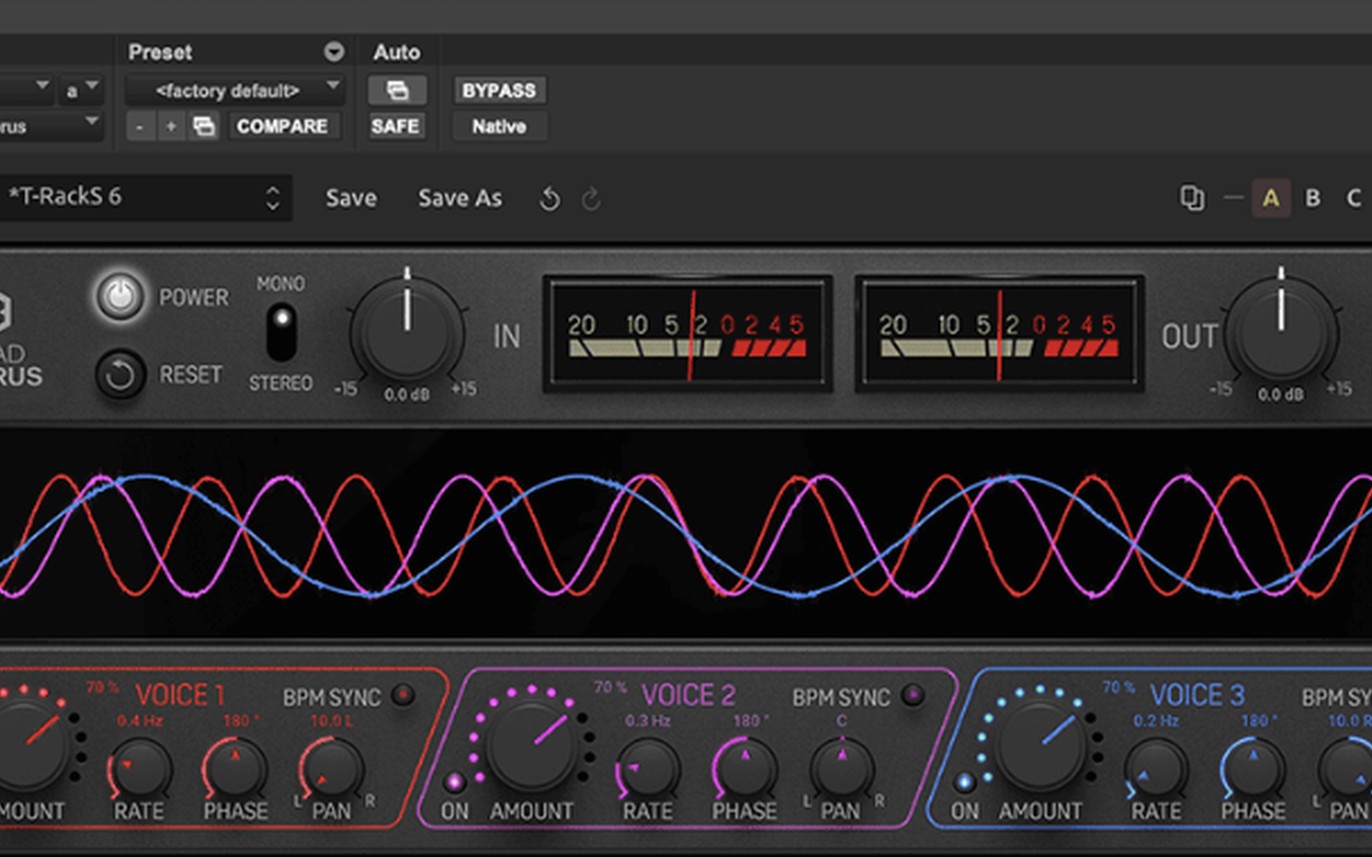
LO-FI Punch worked well on synths and other selected elements when I wanted extra grit and texture. I also really liked Triad Chorus because it gives width and movement without going too far.
The tape emulations gave me the analog tone I was looking for, and I have been using them a lot on buses, specific instruments, and vocals.
How do you use T-RackS plug-ins to add punch and power without flattening the movement that gave the original mix its personality?
The key is to work in layers and avoid overusing any single plug-in.
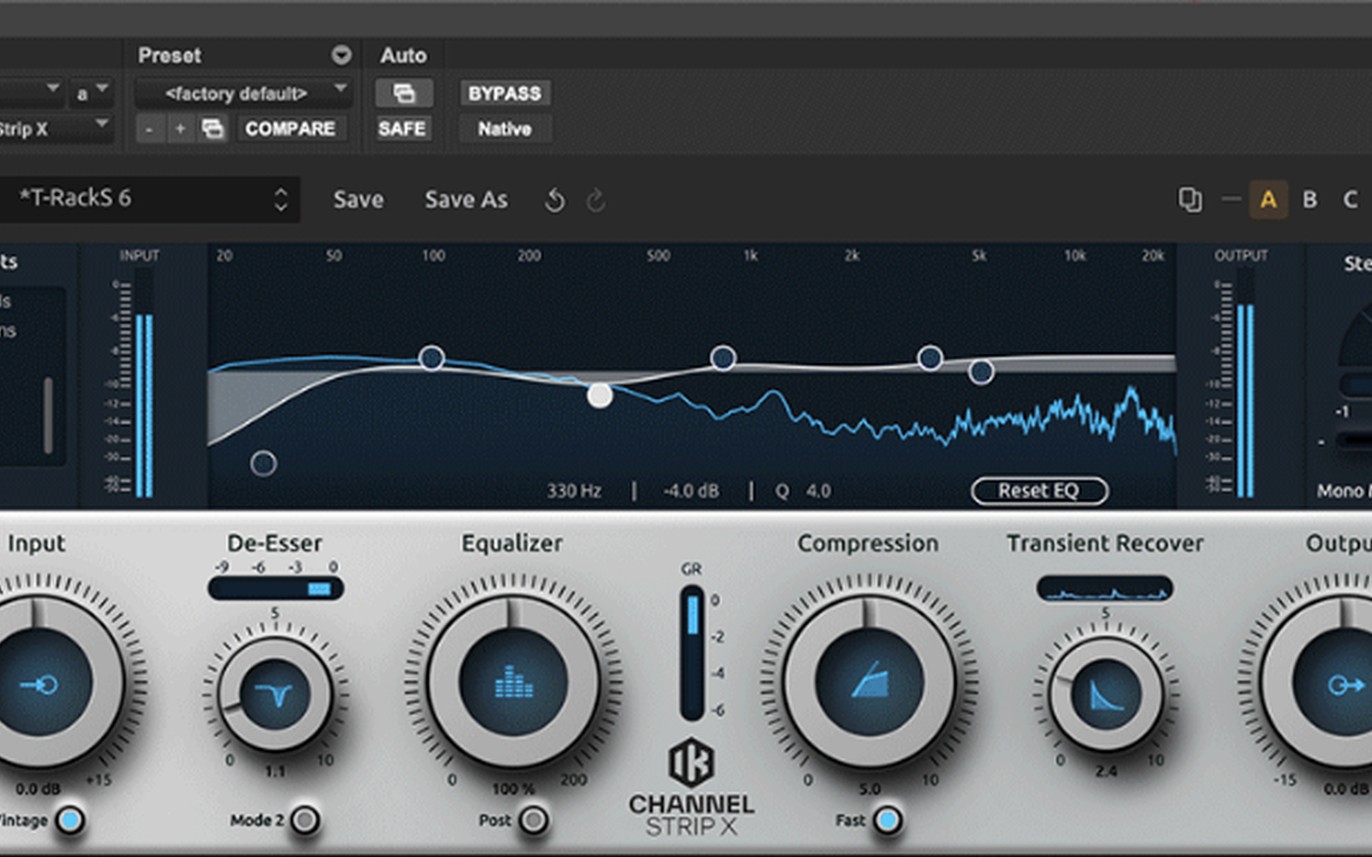
I use Channel Strip X and its transient shaper to add punch without squashing the signal. The Classic Clipper placed before the limiter helps control peaks in a musical way, leaving room for Stealth Limiter to work transparently.
To preserve movement and groove, I rely heavily on the classic emulations, including Black 76, White 2A, and the Distressor-style tools, with carefully tuned attack, release, and low ratios.
The tape emulations then help pull everything together without flattening the track.
Were there moments when the new mix slightly changed the emotional feel of the track? For example, with a tighter low end, a cleaner top end, or a greater sense of control?
Yes, especially in the chorus and the bridge.
The tighter low end made the groove feel more physical and engaging. The vocal bus, with the Joe Chiccarelli Vocal Strip in parallel, made the vocals clearer and more characterful, adding more emotion to the performance.
Cleaning up the top end and adding a bit of air helped the melodies breathe and sit clearly in the mix. LO-FI Punch on the synths brought a current texture that slightly shifted the emotional color without changing the original identity.
In the end, the new mix felt more complete and had an added layer of analog character.
In current production, what does a modern mix mean to you? And why has the T-RackS suite remained a useful tool to achieve that?

To me, a modern mix means excellent translation across playback systems, competitive impact, clarity, and depth without sacrificing groove or movement.
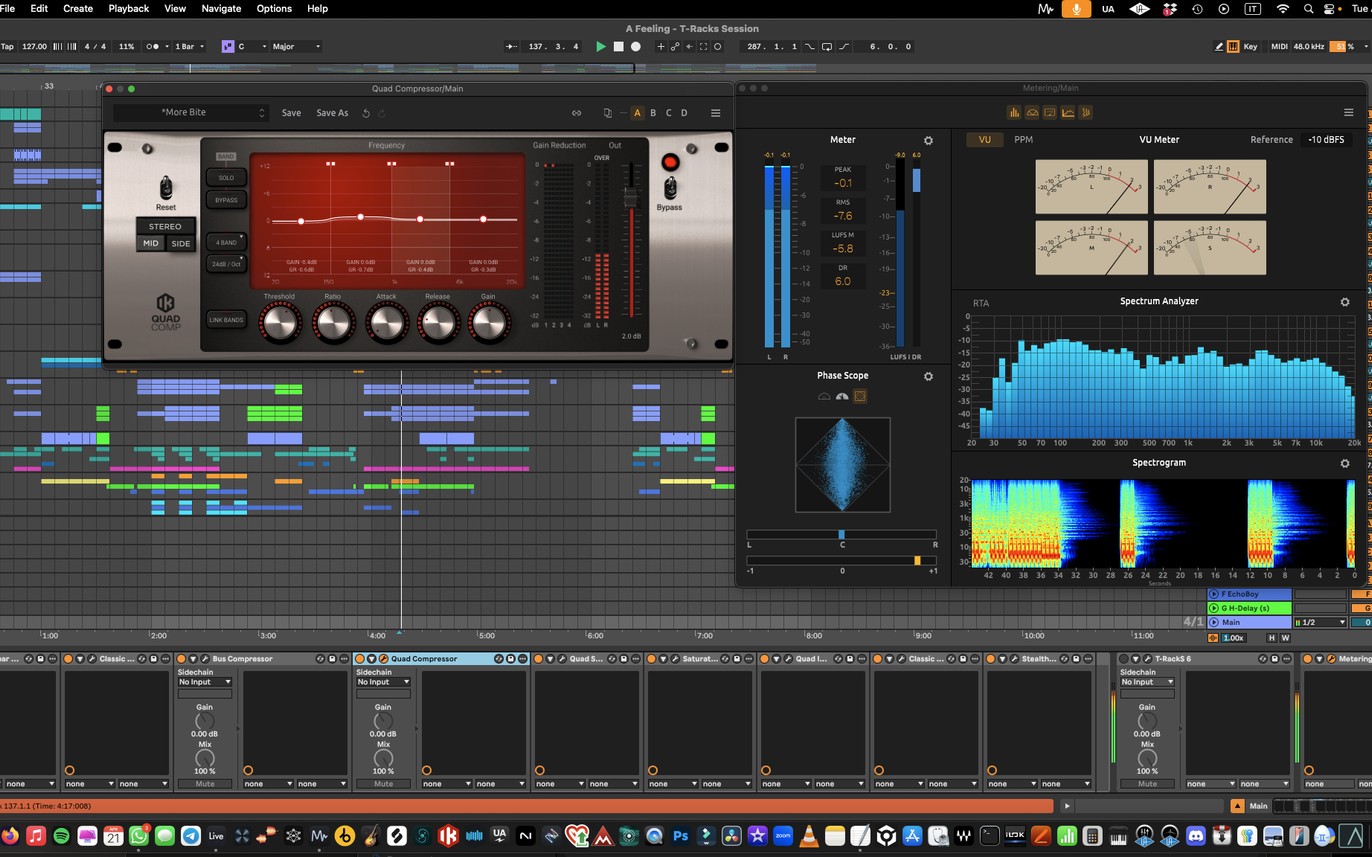
T-RackS 6 helps me a lot because it combines analog-style processors with effective modern tools. I was particularly impressed by the classic emulations, including LA-2A, 1176, and Distressor-style processing, along with the tape emulations, Joe Chiccarelli Vocal Strip for vocals, LO-FI Punch for adding creative character, and Triad Chorus for width and movement.
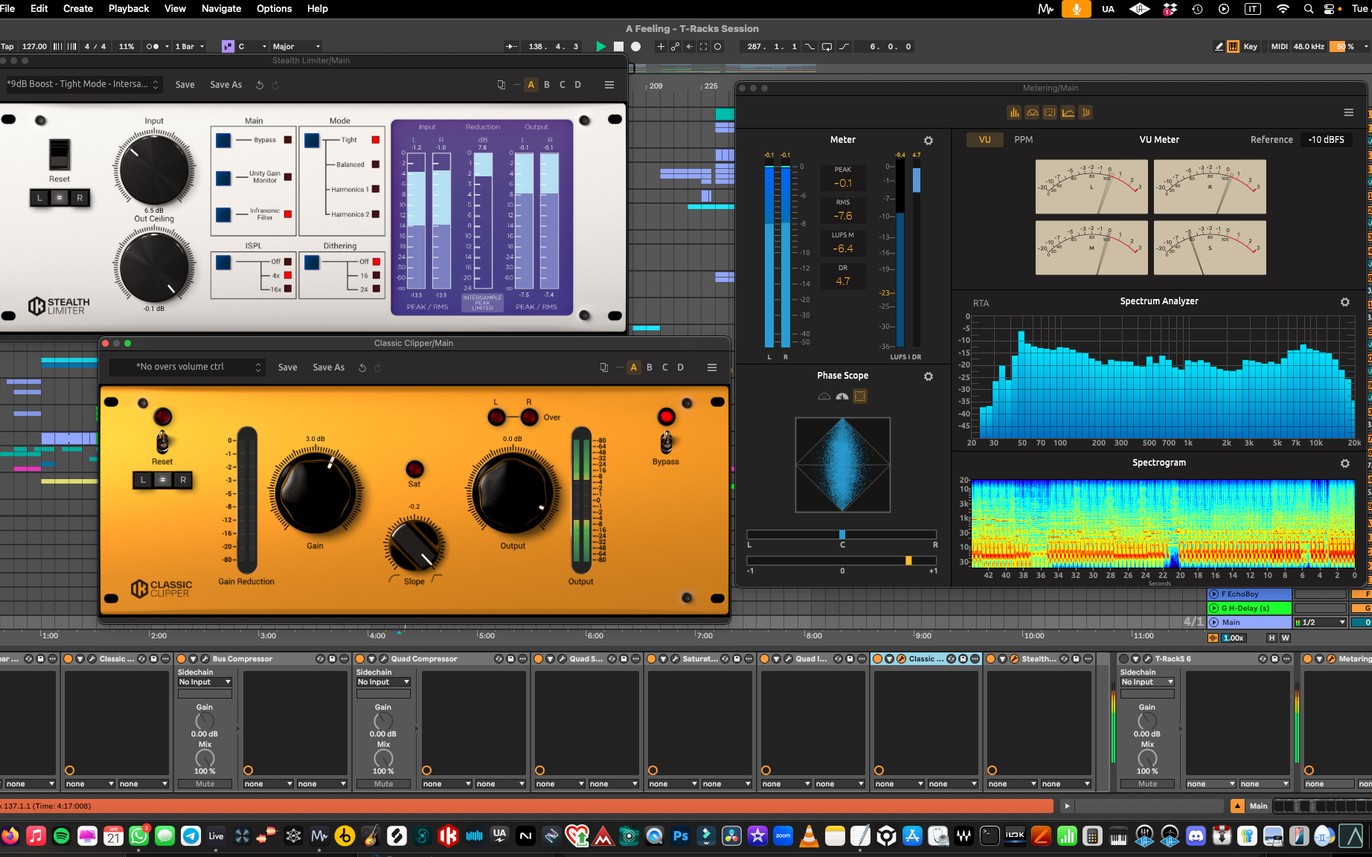
I also really like how Stealth Limiter, when used with Classic Clipper, allows you to push the LUFS high while keeping the mix clean, punchy, and controlled.
I tested Auto-Master as well and found it quite accurate. It is fast, intelligent, and gives a solid starting point without overdoing it. Everything sounds cohesive and musical. In the end, I can focus on the music instead of struggling with too many different plug-ins.
Wrapping Up Our Chat With Nihil Young
The biggest lesson from Nihil Young’s T-RackS 6 rebuild is simple: a finished mix can still improve when the process is focused.
Mattia was not chasing extra processing for its own sake. He was testing whether a single suite could help him improve low-end control, vocal presence, tonal character, peak management, and final loudness while preserving the track’s identity.
That is where IK Multimedia’s T-RackS plug-ins make sense for producers. Bass ONE gives him low-end saturation and control at the mix bus level. The Joe Chiccarelli Vocal Strip gives him a direct way to shape vocals. The tape emulations add analog tone across buses, instruments, and vocals. Classic Clipper and Stealth Limiter help him push the level without losing clarity. For producers who want their mixes to feel finished without rebuilding their entire workflow, T-RackS 6 offers a practical set of tools for the problems that show up at the end of a track.
Check out IK Multimedia’s T-RackS plug-ins to see how they can fit into your own mixing and mastering chain. And remember for a limited time, get 60% off the T-RackS processors mentioned in this article with promo code NIHILTR6